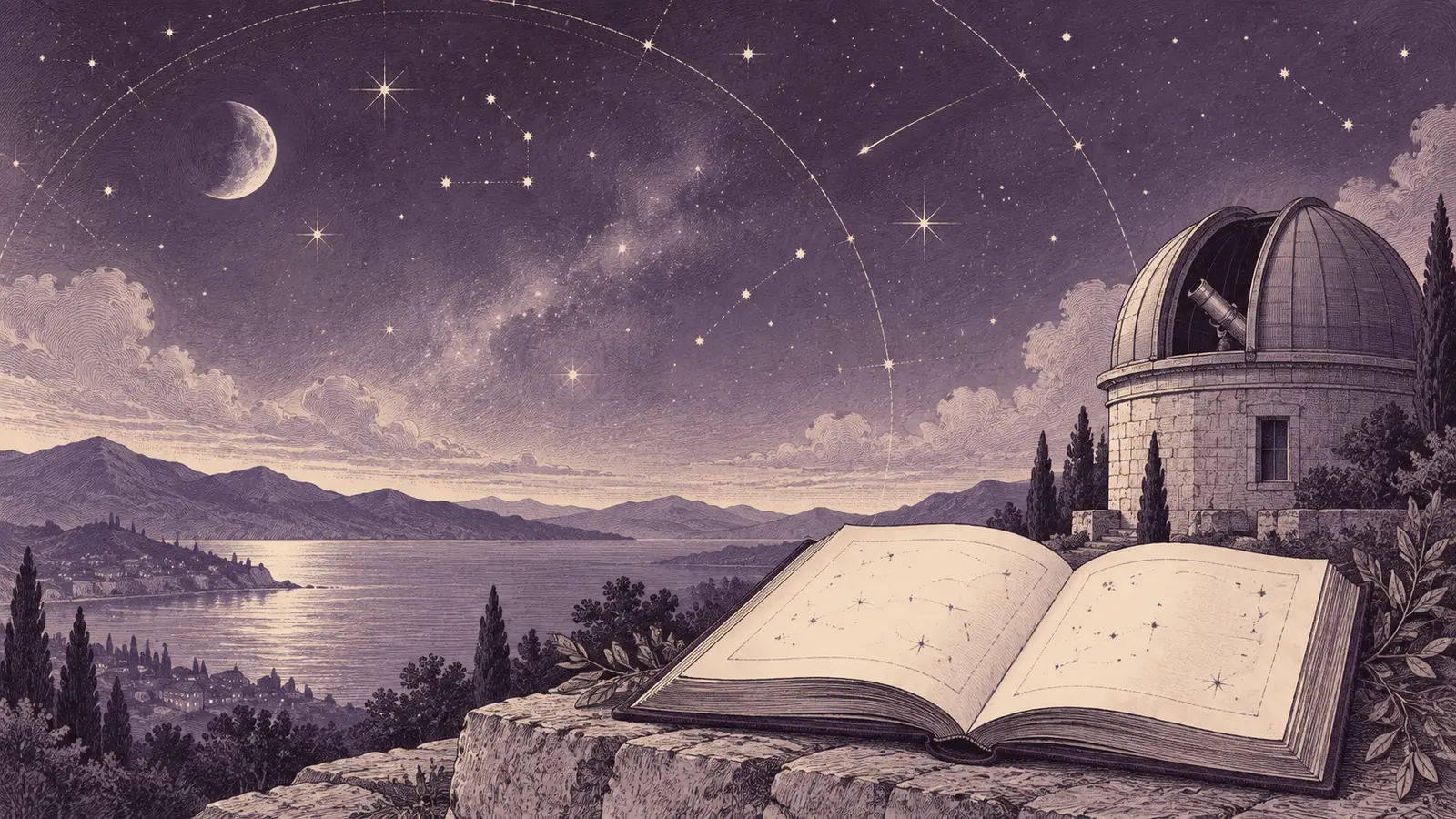
A seasonal journal can begin with a return instead of a forecast. Choose a place where you feel safe, spend a few minutes looking at the sky, and write down what caught your attention. A zodiac symbol might give the page a theme, much as a drawing chosen for personal meaning might. It does not tell you what the season will bring. The page holds a present experience and leaves room for another visit.
There is a specific astronomical reason to return. Earth travels around the Sun once each year, and our view into the night sky changes along the way. From one night to the next, stars appear slightly farther west than they did the night before. What you can see also depends on your location on Earth. A comparison between visits should therefore keep the place and time in view, instead of assuming every reader will see the same sky.
Imagine a first entry about recognizing Orion for the first time in several months. NASA uses the return of a constellation to view as an example of skywatching. You could record where and when you looked, then describe the pattern you recognized. If city lights limit the view, an open place away from bright lights may reveal more stars, provided it is somewhere you feel safe. No special equipment is required to begin looking.
Several months later, open a new page on the same subject. A skywatching app can help you find out what may be visible from your location on a chosen date and at a chosen time. Looking for yourself is a separate step. Recognizing a star pattern, remembering your first entry, and finding a place to look are different actions. Record which one you completed, which remains uncertain, and what the conditions actually allowed you to see.
A constellation name can also become a journal motif without changing the observation. Across cultures, constellations have had different names, reflecting the figures people imagined seeing in the sky. Astronomy now officially recognizes 88 constellations as regions of the sky. The picture imagined between stars is not a physical connection between them. On your page, a name or animal it brings to mind can belong to personal reflection; the part of the sky you observed belongs to a description that others can check.
Here is an invitation to reflect, not a claim that stars produce an effect: if a symbol appeals to you, what question would you like to pair with it this season? You might ask, “What did I make time to notice?” or “What would I like to remember?” These questions require neither a horoscope nor the same answer from everyone. Astrology attributes an ability to predict the future or describe a person to celestial positions; its claims are not based on scientific evidence.
On the next visit, read only what you actually wrote before. A pattern you recognized then may be outside your present view; another may draw your eye. You do not need a story about personal destiny to account for the difference. The night sky changes as Earth moves along its orbit, and your location matters too. The symbol remains a choice for reading or entertainment, while the notes preserve what you observed.
The journal can end with two questions to revisit later: “What changed in the view?” and “What have I chosen to remember?” The first invites a comparison of observations made at particular times and places. The second concerns your own memory. They can share a page without becoming the same kind of claim. With each return, a few minutes are enough to look, write honestly, and leave the next visit to bring its own answer.
Astrology is entertainment and an invitation to reflect. It does not predict events or replace professional advice.